How Accurate Is Your Phone Clock?
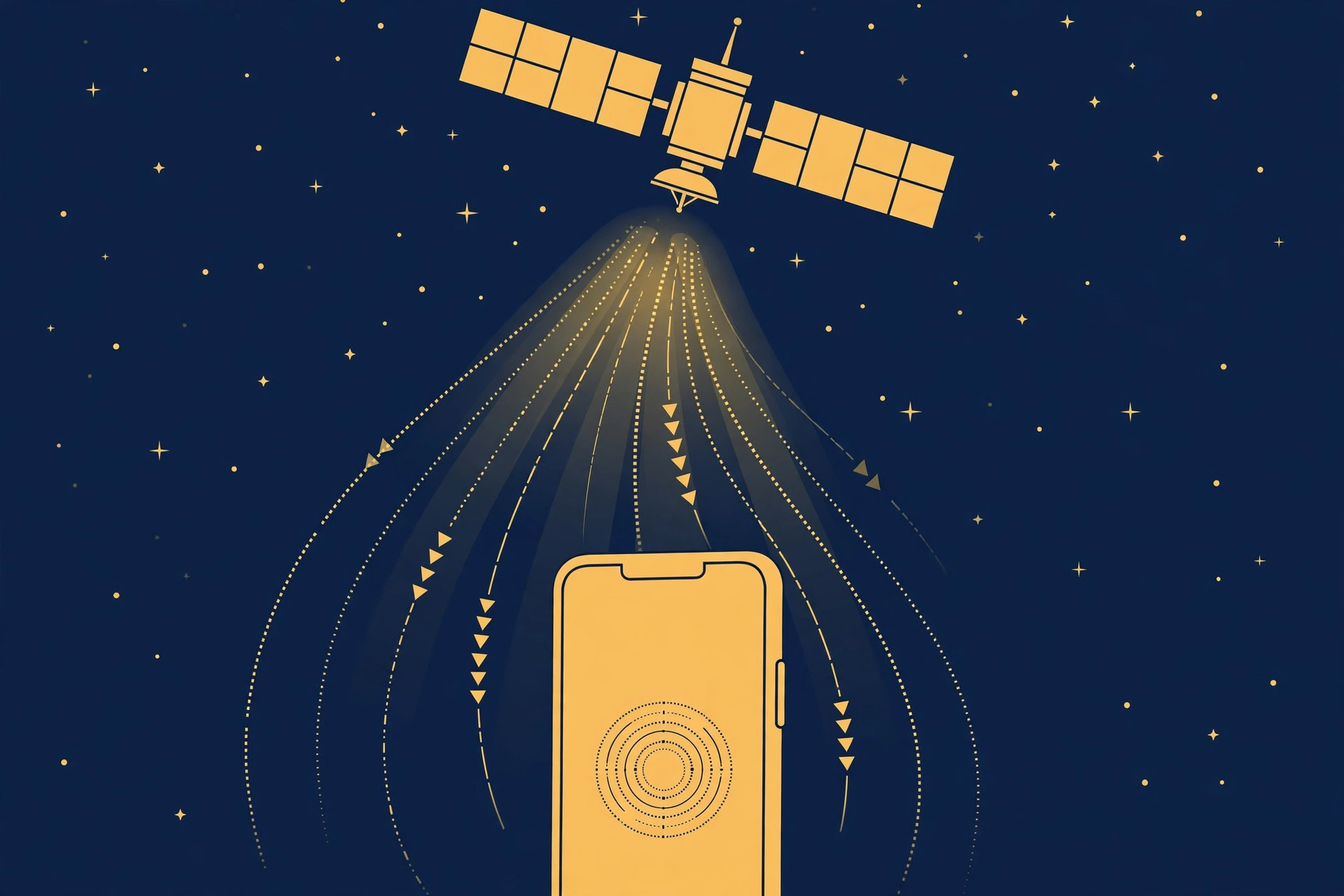
Your phone asks, it does not keep
Left alone, a phone's internal clock would drift like any cheap quartz clock, seconds a week. You never notice because the phone constantly corrects itself. It takes time from the mobile network, from Wi-Fi, and most precisely from GPS satellites, whose signals carry atomic clock time and whose whole positioning method depends on nanosecond timing. The setting labelled automatic date and time is doing quiet, continuous work: every check compares the phone's count against the network's and nudges it back into line. There is one visible exception: the clock shown on a locked phone can lag a fraction after waking or after a zone change, while it fetches a fresh sync. If two phones disagree at the moment of a photograph or a race start, give them a few seconds online and they will converge; the disagreement is a stale display, not a broken clock.
How accurate is accurate enough
For daily life the answer is absurdly good: a synced phone is typically within a fraction of a second of UTC, far better than any mechanical watch ever made. The places accuracy frays are the edges: a phone in airplane mode for weeks, a device with a failing battery that loses its place, or software that caches a timestamp and reuses it. Traders, scientists and broadcasters who need more use dedicated time servers and protocols that account even for the delay of the signal travelling to them. Travellers see the machinery working when a phone lands in a new zone and updates itself, sometimes a beat after the network connects. That update is the same conversion this site's zone tools perform, offset applied to a UTC instant, done by the phone before you think to ask.
Trust, but know the source
The practical lesson is that your phone's clock is a display, not a source. The source is a chain: atomic clocks, national laboratories, network servers, satellites. When two phones disagree at a meeting, at most one is synced, and the one that has been offline longest is the suspect. For anything that must be timed precisely, a race, a bid deadline, a timed exam, check the device against a known time signal first. The technology is miraculous, but only while it is connected to the chain that feeds it. The humbling comparison is with the past: a good eighteenth century chronometer, the pride of a navy, drifted more in a day than a synced phone drifts in a year. Accuracy this complete is easy to take for granted precisely because it almost never fails.