The Julian and Gregorian Calendars
Caesar's calendar and its slow leak
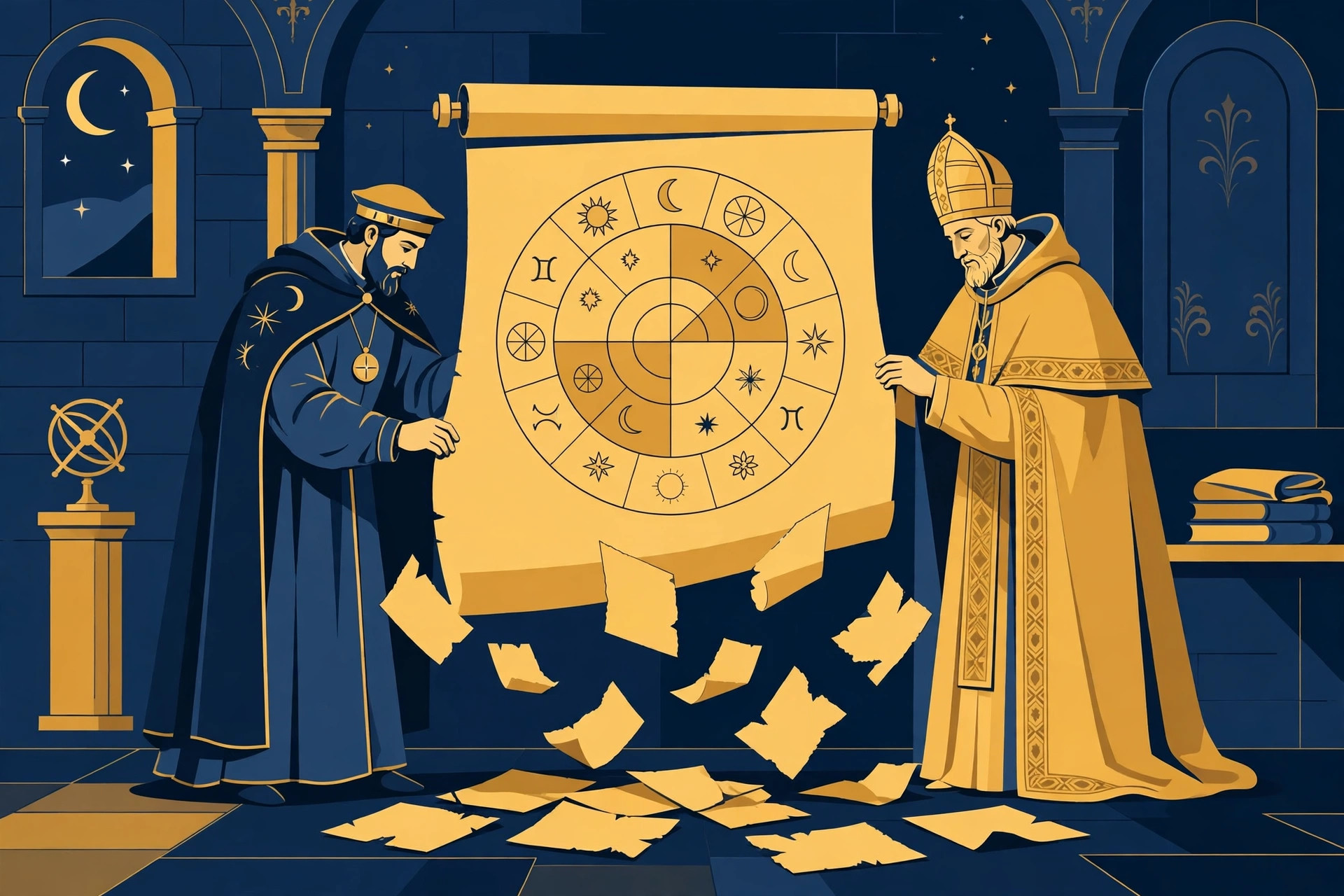
The Julian calendar, introduced in 46 BC, was a triumph of simplicity: 365 days, a leap day every four years, no exceptions. It served Europe for over sixteen centuries. Its flaw was size, not shape: at 365.25 days it ran about 11 minutes longer than the real year, leaking a day every 128 years or so. By the 1500s the leak had moved the spring equinox from 21 March to 11 March, which mattered intensely to the Church because the date of Easter is calculated from the equinox. The reform also moved the start of the year in many places to 1 January, where Rome had originally put it, ending the confusion of years that began in March or on Easter. Old documents that show a date like 10 February 1700 with a double year are showing the overlap of the two habits, and genealogists learn to read them with care.
The Gregorian fix of 1582
Pope Gregory XIII's reform did two things. It deleted ten days at a stroke: in the lands that adopted it first, Thursday 4 October 1582 was followed by Friday 15 October. And it tightened the leap rule, removing leap days from century years not divisible by 400, which slowed the leak to a day in several thousand years. Catholic countries adopted the new calendar quickly. Protestant and Orthodox countries resisted a pope's calendar for generations, so for over a century Europe ran on two calendars at once, ten and later eleven days apart. One myth deserves retiring: the story that people rioted in England demanding their eleven days back. Historians find no solid evidence for the riots; the phrase comes from a satirical print. The change did cause real confusion in rents, ages and contracts, which Parliament handled by moving deadlines rather than by restoring days.
Britain switches, and dates get footnotes
Britain and its colonies finally switched in 1752, by then eleven days adrift, and the change explains the double dates in old documents, where a February day might be recorded as belonging to two different years under the old and new styles. Russia held out until 1918, which is why the October Revolution is commemorated in November. The calendar on your phone is the Gregorian one, extended backwards as if it had always existed. Historians call that the proleptic Gregorian calendar, and every weekday and date tool quietly uses it too. The calendar's long stability since is itself remarkable. The Gregorian rules are now so universal that international standards simply assume them, and the next reform, if one ever comes, will be negotiated by standards bodies rather than proclaimed by popes.